
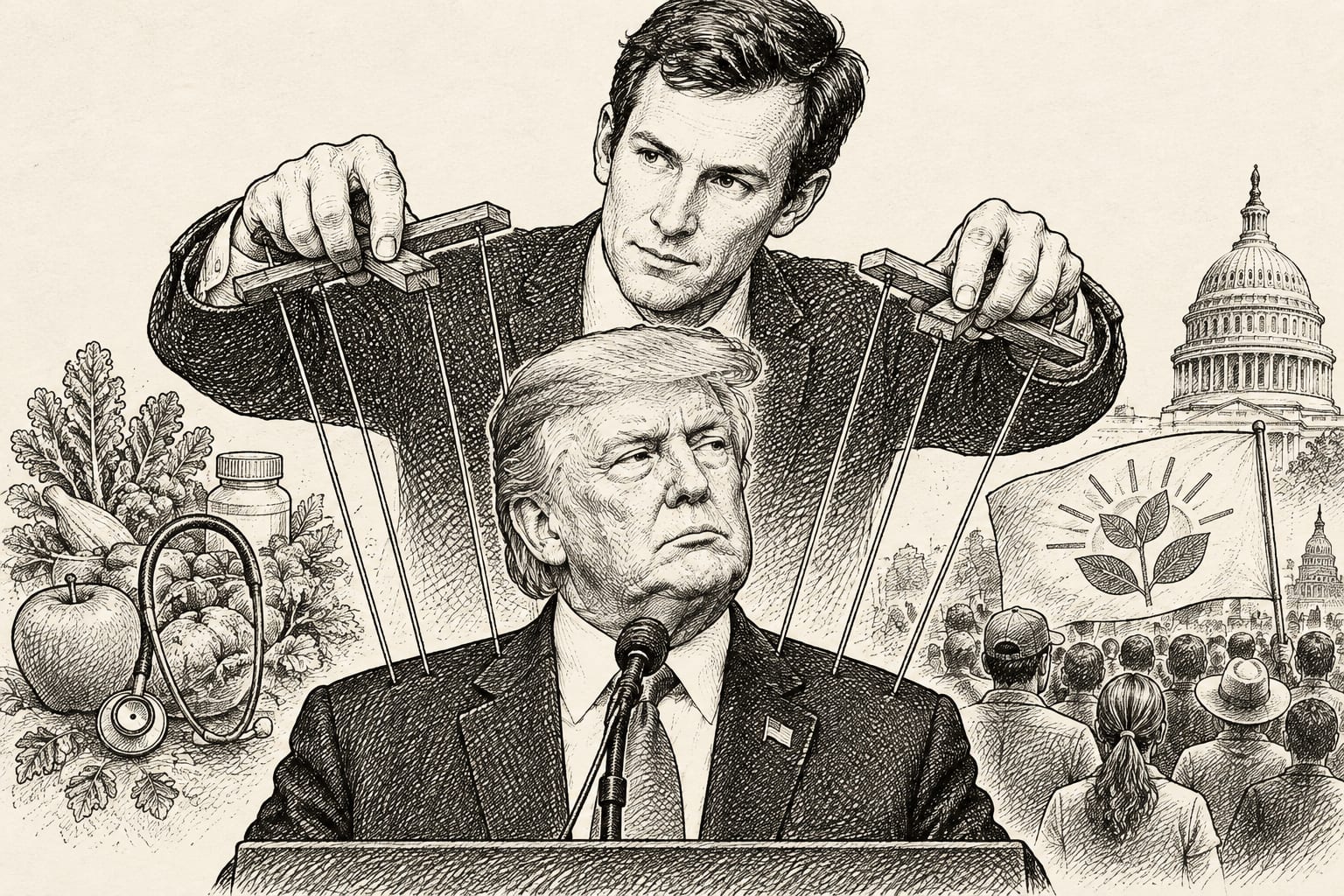
Calley Means just confirmed what a lot of Americans suspected all along. The health reforms Trump promised got watered down by lobbyists working both sides of the aisle, and Trump himself was often kept in the dark.
Means, who helped bring Trump and RFK Jr. together during the 2024 campaign, resigned as an adviser to Kennedy last month. He sat down with Joe Rogan and laid out exactly how Big Food and Big Pharma money shaped the Make America Healthy Again (MAHA) agenda behind closed doors.
Quick Take
- Means says Chief of Staff Susie Wiles blocked a crackdown on sugar, citing midterm fundraising needs.
- A proposed definition of "ultra-processed food" got delayed after an Oreo-maker lobbyist threatened to call the White House.
- Industry pressure nearly kept the word "glyphosate" out of the MAHA commission report entirely.
- The administration quietly backed Monsanto in a Supreme Court case, and Trump reportedly had no idea.
- Means says officials pushed fruit-flavored vapes to court young male voters before the midterms.
What They're Not Telling You
Means told Rogan he and former FDA Commissioner David Kessler wanted to go after sugar and refined carbs together. Wiles shut it down. Her reasoning, according to Means: "I need the money from the sugar people to win the midterms."
"We made the midterm strategy the policy strategy." — Calley Means
Means called Wiles the "most powerful chief of staff in modern American history," with a "stranglehold on any policy decision." He says a lobbyist for Mondelez, the company behind Oreo, personally pressured him to kill a proposed ultra-processed food definition, even though it wouldn't have banned a single product.
The pesticide fight was worse. A poll from Trump's own pollster, Tony Fabrizio, found 92 percent of Republicans want pesticides regulated. Still, Means says it became the "greatest fight" of his life just to get the word "glyphosate" into the MAHA commission report. He describes the industry pushback as "almost violent."
A Wiles deputy allegedly tried to ram through an order declaring glyphosate a national security matter, calling it "final" and telling Means that RFK Jr. shouldn't even bring it up with Trump. Separately, the Justice Department urged the Supreme Court to take up a case involving Roundup's cancer warning label. The administration sided with Monsanto. Trump reportedly didn't know, and when a farmer raised it with him directly, Trump reportedly asked, "How the hell did this happen?"
Means also claims officials pressured FDA Commissioner Marty Makary to approve fruit-flavored vapes ahead of the midterms, hoping to win over young male voters. Makary resigned in May. Means believes he was pushed out over the vaping fight. After his departure, the FDA eased vape restrictions, and the American Heart Association sued, arguing the move was unlawful.
The Truth As I See It
This isn't a Trump problem. It's a swamp problem. Means says it plainly: this would happen under Democrats too. Lawmakers on both sides chase donor money, and officials know there's a cushy industry job waiting once they leave government.
Scripture warns us plainly: "For the love of money is the root of all kinds of evil" (1 Timothy 6:10). What Means describes is that verse playing out in real time, inside the people's house, with America's health on the table.
Trump ran on MAHA because voters are sick of being poisoned slowly by processed junk and unaccountable pharma. But if his own chief of staff is trading policy for campaign cash, the promise gets hollowed out before it ever reaches your dinner table.
The Other Side
Defenders of the administration will say politics is the art of the possible. Fundraising wins elections, and elections let you keep fighting another day. Compromise, they'll argue, beats losing entirely.
That argument collapses fast. If protecting donor cash means burying a 92 percent supported pesticide reform, or quietly siding with Monsanto against a cancer victim, then the "art of the possible" has become the art of betrayal. Voters didn't ask for incrementalism. They asked for their kids to stop being poisoned.
The Question You Should Be Asking
If a chief of staff can kill popular reforms to protect sugar and pesticide money, who's actually in charge, the president or the lobbyists? Dr. Dan says: until Washington fears God more than it fears losing donor checks, your health will keep losing to someone else's profit.
Source: The Federalist
Before this, we covered: War on the Amish: Behind the Coordinated Assault on One of America's Healthiest Communities


